
We all have the potential to take on leadership and management opportunities within our teams, at various levels in the workplace, with our partners and collaborators, and in our communities. Strong leadership and management are critical components to achieving and sustaining quality improvement in child safety and serve as a cornerstone to the CSN Framework for Quality Improvement and Innovation in Child Safety.
This webinar will review the Managers Who Lead “Leading and Managing Framework,” which includes four leadership practices - scanning, focusing, aligning/mobilizing, and inspiring – and four management practices - planning, organizing, implementing, and monitoring/evaluating. You’ll have an opportunity to reflect on how you can build upon skills in these practice areas, and we’ll discuss how you can integrate quality improvement strategies into your leadership and management practices. This webinar will also highlight Child Safety Learning Collaborative Teams who have taken concrete steps to become more effective leaders.
Presenter:
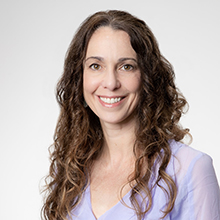
Jennifer Leonardo, a nationally known expert in public health and injury and violence prevention, has over 20 years of experience in quality improvement, health and social work program development, quantitative and qualitative research methods, and capacity building. Her expertise includes mental health promotion, trauma-informed care, cross-cultural issues, intimate partner violence prevention and treatment, and suicide and self-harm prevention.
In her leadership of Children’s Safety Network at EDC (CSN), Leonardo builds the capacity of states and jurisdictions to use data and evidence-based strategies to reduce injury-related deaths, hospitalizations, and emergency room visits. She guided 21 states and jurisdictions in improving child safety through rapid cycle tests of change and supported state public health workers in spreading evidence-based practices.
Leonardo developed an evidence-based theory and model for school-based trauma-informed support in Massachusetts public schools. Internationally, she managed a country-wide public health quality improvement program and facilitated a leadership development program with health workers in seven African countries.
She holds a PhD and MSW from the Boston College Graduate School of Social Work and an AB in biology from Harvard University. She is a licensed social worker and is bilingual and bicultural in Portuguese.
Facilitators:
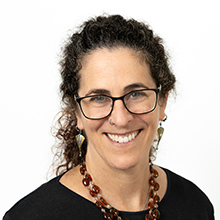
Jenny Stern-Carusone, MSW, has over 20 years of experience as a prevention professional, designing and providing technical assistance to state agencies, tribal governments, community-based organizations, schools, and juvenile justice departments to improve prevention strategies and service delivery by customizing approaches to address clientele’s unique needs. As Associate Director at the Children’s Safety Network, Jenny builds the capacity of states and jurisdictions to use data and evidence-based strategies to reduce injury-related deaths, hospitalizations, and emergency room visits. She leads a team implementing quality improvement approaches to improve child safety through rapid cycle tests of change and spreading evidence-based practices. Jenny has presented at national conferences on child and adolescent injury prevention, systems improvement, and youth mentoring and juvenile justice reform. Her other expertise includes online event design and implementation, including adult learning principles and webinar production in multiple platforms. Additionally, she serves as a clinical Training and Technical Assistant for the Safeguard Veterans suicide prevention program and as the chief technical producer for the Regional Educational Laboratories.
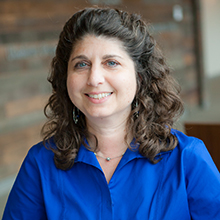
Lauren Gilman, MA, is a highly skilled technical assistance specialist and an experienced program manager with extensive knowledge of mental health promotion, behavioral health, school-based initiatives, substance misuse prevention, youth violence prevention, and mentoring. Drawing on her health communications and capacity-building expertise, she helps community organizations and school districts bridge research and practice, implement and sustain evidence-based programs, strengthen cross-sector collaboration, and use data-driven planning to achieve systems change. Lauren is a training and technical assistance specialist for the Children’s Safety Network and is the content specialist for bullying prevention for the Child Safety Learning Collaborative. Her integrated approach to advancing substance misuse prevention and SEL emphasizes interconnected risk and protective factors and fosters collaboration at the community level.
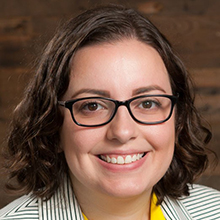
Maria Katradis, PhD, is an education and public health researcher with expertise in youth development, adult learning, international education, and quality improvement. Maria is a training and technical assistance specialist for the Children’s Safety Network and is a co-manager of the Child Safety Learning Collaborative. She is the content specialist for suicide and self-harm prevention and sudden unexpected infant death prevention. She manages and analyzes data, provides training and technical assistance, and presents on topics such as quality improvement and evidence-based and evidence-informed strategies for child and adolescent injury and violence prevention. She utilizes both qualitative and quantitative research methods to help states develop a clearer picture of where they are in their quality improvement process.