CSN Fact Sheets, Reports and Issue Briefs
 This page displays all Children’s Safety Network (CSN) Fact Sheets, Reports, and Issue Briefs. Please feel free to download and share through Facebook, X, Pinterest, or email.
Released Date:
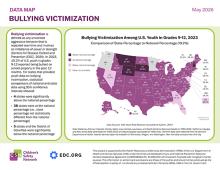
The Child Safety Learning Collaborative addresses the leading causes of child and adolescent injuries, fatalities and hospitalizations for youth ages 0-19. This data map provides statistical comparisons of national and state rates for Bullying Victimization (2023), Sudden Unexpected Infant…
Released Date:
The Planner is for use at the departmental and/or programmatic/work unit level to assess integration of integrative approaches in child safety initiatives. The Planner may be used as a stand-alone tool or with the CSN Framework for Quality Improvement and Innovation in Child Safety: A Guide to…
Released Date:
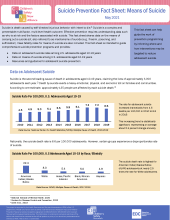
Suicide is a complex and preventable multi-factor, multi-level health outcome. Effective prevention requires understanding data such as who is at risk and the factors associated with suicide. This fact sheet shares data on the means of carrying out a suicide act, also referred to as mechanisms of…
Released Date:
Injuries are the leading causes of morbidity and mortality among U.S. children and adolescents. State injury and violence prevention programs address a broad range of injury topics across varying populations, with initiatives funded by multiple sources, including federal agencies, hospitals,…
Released Date:
Injuries and violence are leading causes of morbidity and mortality among U.S. children and adolescents. These injuries are preventable. Researchers have identified many strategies that are effective in preventing injuries in this population. This paper synthesizes findings from recent systematic…
Released Date:
Assessing Prevention Capacity & Implementing Change: A Bullying Prevention Capacity Assessment and Change Package | HRSA
Released Date:
The U.S. Department of Health and Human Services defines bullying as repetitive aggressive behavior that is repeated over time and involves an imbalance of power or strength (Centers for Disease Control and Prevention [CDC], 2017a). Bullying behaviors may include teasing, name calling, mockery…
Released Date:
The injury and violence prevention systems toolkit is a compilation of resources aimed at state and jurisdiction public health practitioners and organizational leaders and managers committed to reducing injuries and violence through systems thinking and quality improvement. The toolkit is organized…
Released Date:
Health disparities are preventable differences in the burden of injury or of opportunities to achieve optimal health that are experienced by socially disadvantaged populations (Centers for Disease Control and Prevention [CDC], 2008). Health disparities are often related to the historical and…
Released Date:
This fact sheet covers the costs of childhood injuries, including medical costs, work loss costs, and quality of life loss costs. Work loss costs include lost wages of injured persons and lost household work, or, in the case of fatality, lost earnings and household work over the victim’s…
Released Date:
This publication lists evidence-based strategies and readings on child passenger safety, falls prevention, interpersonal violence prevention, suicide and self-harm prevention, and teen driver safety.
Released Date:
Traumatic Brain Injury (TBI), defined here as a concussion, skull fracture, or internal brain injury, can have life-long cognitive, physical, and financial impacts. Preventing these injuries requires an understanding of what causes them. To understand the causes of TBI, the…
Released Date:
Participants in the Child Safety Collaborative Innovation and Improvement Network (CS CoIIN) are identifying and developing innovative ways to collect real-time outcomes data. Typically, data on injury-related deaths, hospitalizations, and emergency department (ED) visits are centrally collected at…
Released Date:
Bullying is a major public health concern. According to the 2013 Youth Risk Behavior Survey, a biennial survey of students in grades 9-12 that is conducted by the Centers for Disease Control and Prevention (CDC), 20% of students reported being bullied on school property and 15% reported being…
Released Date:
Each year, more than one million youth ages 0 through 19 sustain a non-fatal traumatic brain injury (TBI) (NEISS; NEISS –AIP 2007-2009). With the passage of legislation in all states and the District of Columbia to prevent and manage youth sports concussions, awareness of TBI is on the rise.…
Released Date:
This resource was recently updated. Visit the latest version. Summarizes the incidence and cost savings of interventions to prevent injuries due to motor vehicles, impaired driving, open-flame/burns, and violence. Also includes cost savings realized by health/miscellaneous services and…
Released Date:
The following fact sheet provides information about firearm-related injuries and deaths among the 0 through 14 year old population in the United States. It contains a review of data and information about the magnitude of the problem, shows how different demographic groups…
Released Date:
The following fact sheet provides information about firearm-related injuries and deaths among 15 through 24 year olds in the United States. It contains a review of data and information about the magnitude of the problem, shows how different demographic groups are impacted,…

Released Date:
Powerful, rare earth (neodymium) magnets can cause serious injury and death when ingested. The CPSC (Consumer Product Safety Commission) has reported an estimated 1,700 ingestions of magnets that were treated in emergency departments between Jan. 1, 2009 and Dec. 31, 2011. These injuries are…
Released Date:
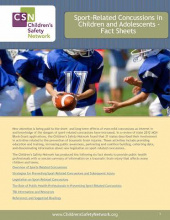
New attention is being paid to the short- and long-term effects of even mild concussions as interest in and knowledge of the dangers of sport-related concussions have increased. In a review of state 2012 MCH Block Grant applications, the Children’s Safety Network found that 31 states described…